
Getting Tiered: Why One Size Fits None in Membership Models
Why different audiences need different experiences, not just different price tags

Last week, I introduced this series by asking when “exclusive access” starts to feel more like just access. The question came from watching the membership world get crowded, overlapping, and fragmented over the past few years.
This week, I want to dig into something specific that keeps coming up: the difference between building membership tiers versus building different membership types for different audiences.
Most organizations default to tiers. These might include same benefits, just more of them as you spend more. It makes sense on paper, but when I map it against how people actually engage, it doesn’t always hold up.
The Checkout Page Question
I wrote last week about standing at checkout pages, asking myself: Will this membership actually connect me to people/a thing that matters, or will it just be another login I forget about?
That question has made me think differently about how memberships get designed.
When I see tiered memberships, I’m being told that everyone wants the same thing, just in different quantities. The assumption is that we’re all on the same journey, just at different stages based on how much we spend. That’s just not how it always works in practice.
Different Contexts Entirely
Consider these situations:
The person attending every home game has completely different needs than the person watching every match from another country.
The parent bringing their kid twice a season is in a different context than the season ticket holder in year 20.
The casual fan dipping in occasionally wants something different than the person analyzing every play.
These aren’t the same person at different spending levels. They’re different people in different life contexts entirely.
When I’ve worked on membership strategies, the ones that actually stuck didn’t think in tiers at all. They mapped out distinct audiences with distinct needs and built parallel experiences.
For example:
Local fans who attend regularly need in-person experiences, early entry, exclusive events, and direct involvement. Their membership should recognize showing up.
Global fans engaging from afar need digital content, virtual connection, and physical touchpoints like packages in the mail. Their membership should recognize staying connected despite distance.
New fans building their connection need accessible entry points, community with other newcomers, and ways to deepen engagement over time. Their membership should recognize they’re just starting.
These aren’t tiers. A global digital membership isn’t a “lesser” version of season tickets. It’s designed for a completely different context. Both are valuable and both deserve investment.
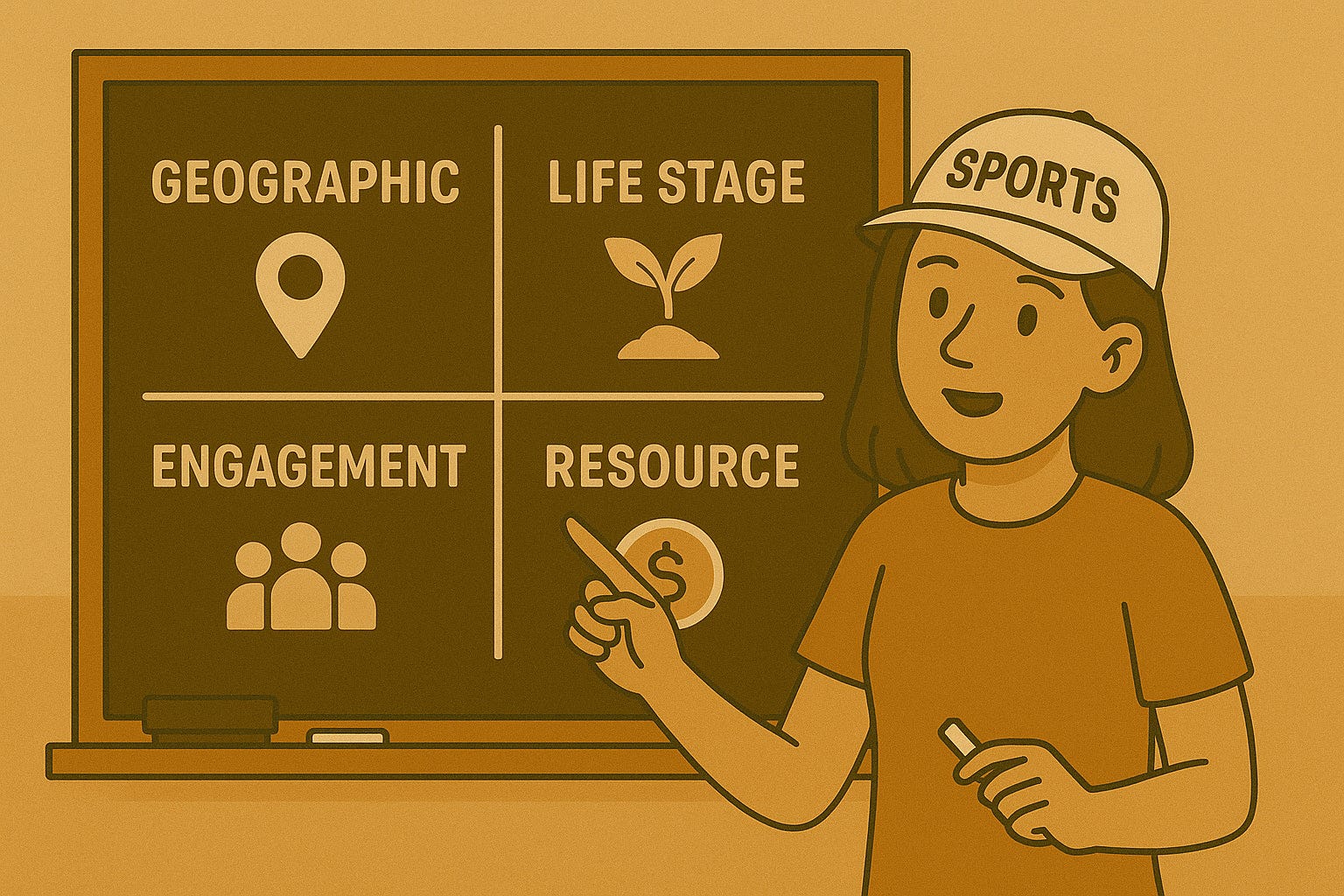
Framework: Context-Based Membership Types
Instead of bronze, silver, gold, etc., here’s what I think works better:
Geographic Context
Where is someone physically located?
Local memberships for fans who can attend regularly
Regional memberships for fans a few hours away
Global memberships for fans who’ll never visit in person
Life Stage Context
Where is someone in their fan journey?
Introduction memberships for people discovering you
Growth memberships for people deepening engagement
Legacy memberships for long-time supporters
Engagement Context
How does someone want to participate?
Deep-dive memberships for fans who want all the details
Community memberships for fans who engage socially
Flexible memberships for fans whose engagement fluctuates
Resource Context
What can someone invest?
Premium memberships for fans with resources to spend
Standard memberships offering core value
Free memberships that create value through network effects
Someone might be local + legacy + deep-dive + premium, or they might be global + new + community + free. The point is you’re designing for actual contexts, not arbitrary spending levels.
What This Actually Means
When someone asks why I don’t charge for Vets in Sports, what they’re really asking is: “Why aren’t you extracting more value?”
I am. It’s just not financial value. The value is in the network that grows stronger every time someone new joins. That’s a different membership model than one optimized for revenue. Both can be right. You have to know what you’re building.
The question isn’t “how do we create loyalty?” It’s “how do we serve the different ways loyalty shows up?”
If you’re building a membership program: map your actual audiences first, design parallel experiences instead of upgrades, and measure different things for different types.
As always, thanks for reading.